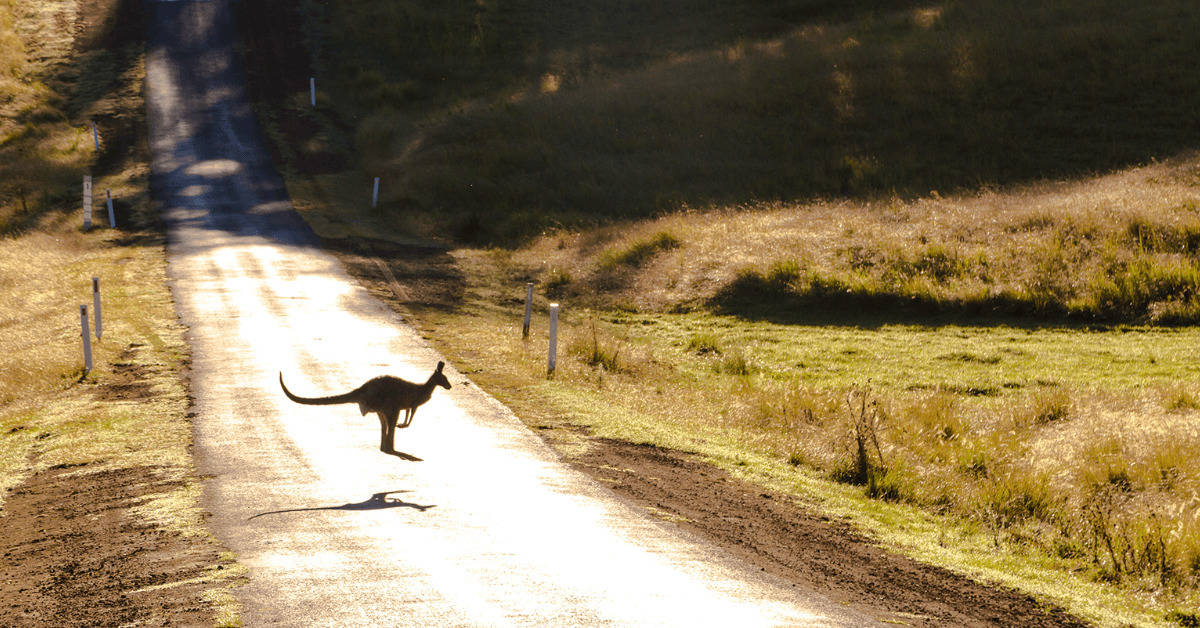
"My Country" is Dorothea Mackellar's love poem to the Australian land, first published in London's Spectator on 5 September 1908 under the title "Core of My Heart". It's the poem that gave Australia the phrase "a sunburnt country", and more than a century later it is still one of the best-known poems the country has.
If you grew up in Australia, you may have learned it by heart at school. If you didn't, you might have found it because someone you love quotes it, or because you're far from home yourself and missing a landscape. Either way, we get it. Homesickness has a way of showing us exactly what we love.
Mackellar died in 1968, and her poems are still under copyright, managed by her estate. So instead of reprinting the whole poem, we share its most famous lines below, link you to the official text, and spend our time on what makes it worth reading.
Where to Read the Full Poem
The complete text of "My Country" is on the official Dorothea Mackellar website, run by the Estate of Dorothea Mackellar. The State Library of New South Wales also has a beautiful story on the poem's original manuscript, kept in her notebook "Verses 1907-1908".
The poem is six verses of eight lines each. It takes about two minutes to read aloud, and it really is a poem that wants to be heard.
The Lines Everyone Knows
The second verse is the one most Australians can recite without thinking:
I love a sunburnt country,
A land of sweeping plains,
Of ragged mountain ranges,
Of droughts and flooding rains.Dorothea Mackellar, "My Country", from The Closed Door, and Other Verses (1911)
Look at how much those four lines carry. Heat, space, rough beauty, and then the two extremes of Australian weather side by side in a single line. There's no prettying it up. The love is for the whole thing, the harsh parts included.
What the Poem Is Really Doing
Many readers skip the first verse, and it's a shame, because it sets up everything. Mackellar opens by speaking to someone who loves the English countryside: tidy woods, green lanes, soft grey skies. She says she understands that love, she just doesn't share it. Hers is different.
That's the argument of the whole poem. The State Library of NSW explains that a few years before she wrote it, Mackellar had listened to young friends in Sydney proudly say they preferred the English landscape to the Australian one. At the time Australians were British subjects, and many called England "home" even if they had never been there. "My Country" is her answer.
From there the poem moves through the land like a slow camera: pale ringbarked forests under the moon, blue mountains in haze, the "hot gold hush of noon", rainforest tangled with vines and orchids.
Then it turns darker: a merciless sky, cattle dying in drought, and finally the relief of rain arriving like a drumming army.
The refrain that gave the poem its first title, "Core of My Heart", comes back twice, each time opening a new verse. And near the end Mackellar names the land with a gemstone image that is about the best one-word portrait of Australia anyone has written: opal-hearted. Hard on the outside, fire within.
How She Makes It Sing
Part of the reason "My Country" sticks is pure music. The lines are short, mostly three beats each, and every second line rhymes. That makes it easy for children to learn and easy for a crowd to say together.
Mackellar also loves lists: plains, ranges, droughts, rains; horizons, sea, beauty, terror; flood, fire, famine. Piling things up like this gives the feeling of a country too big to describe in one breath.
And she's honest. She calls the land wilful and lavish in the same breath, and she doesn't pretend drought is beautiful. The love in this poem has seen the worst of the place and stayed anyway. That's what makes it believable.
Who Was Dorothea Mackellar?
Isobel Marion Dorothea Mackellar was born on 1 July 1885 at Point Piper, Sydney, the only daughter of the physician Sir Charles Mackellar. She was educated at home, travelled widely with her parents, became fluent in French, Spanish, German and Italian, and spent long stretches on the family's country properties in New South Wales.
The Australian Dictionary of Biography says she wrote "Core of My Heart" around 1904, and the State Library of NSW says she put the finishing touches to it while visiting England in 1908. After the Spectator published it, it was reprinted around Australia and then collected as "My Country" in her first book, The Closed Door, and Other Verses (Melbourne, 1911).
She went on to publish The Witch-Maid, and Other Verses (1914), two more volumes of verse in the 1920s, the novel Outlaw's Luck (1913), and two novels written with her childhood friend Ruth Bedford. During the First World War, helped by its place in anthologies, "My Country" became one of Australia's best-known poems.
In later life she was often unwell and wrote little. She was appointed OBE in the 1968 New Year Honours and died on 14 January 1968 in Paddington, Sydney, after a fall at home.
Where Her Legacy Lives Now
In Gunnedah, New South Wales, near where her family had land, there is a bronze statue of Mackellar in Anzac Park, and a "Talking Rock" nearby that plays a recording of her reading the poem.
The town is also home to the Dorothea Mackellar Memorial Society, which has run the Dorothea Mackellar Poetry Awards since 1984. It's Australia's largest and longest-running poetry competition for school students, from Kindergarten to Year 12. We love that her best-known legacy is a whole country of children writing poems about the places they love.
What "My Country" Can Teach Us
You don't have to be Australian to feel this poem. At its heart, it's about choosing to love the place you actually belong to, whatever you've been told is better.
Most of us carry some version of that first verse. We've absorbed someone else's idea of what beautiful looks like, and we measure our own lives, homes and bodies against it. Mackellar's answer is gentle but firm: I understand your love, and mine is different.
So here's a small practice. Write your own eight lines about the place that shaped you. Include one thing that's genuinely hard about it, the heat, the traffic, the long winters, alongside what you love.
Read it back. Notice that the hard thing makes the love more real, not less.
And if you're far from home right now, let yourself miss it. That ache is proof of how deeply you've been rooted.
Mackellar turned hers into the poem a nation still knows by heart. Yours can be a letter, a phone call, a photo on the wall. You're allowed to let your thoughts fly home.
Lifeism shares ideas and practices for reflection. It is not medical, psychological or financial advice. Read our Disclaimer.