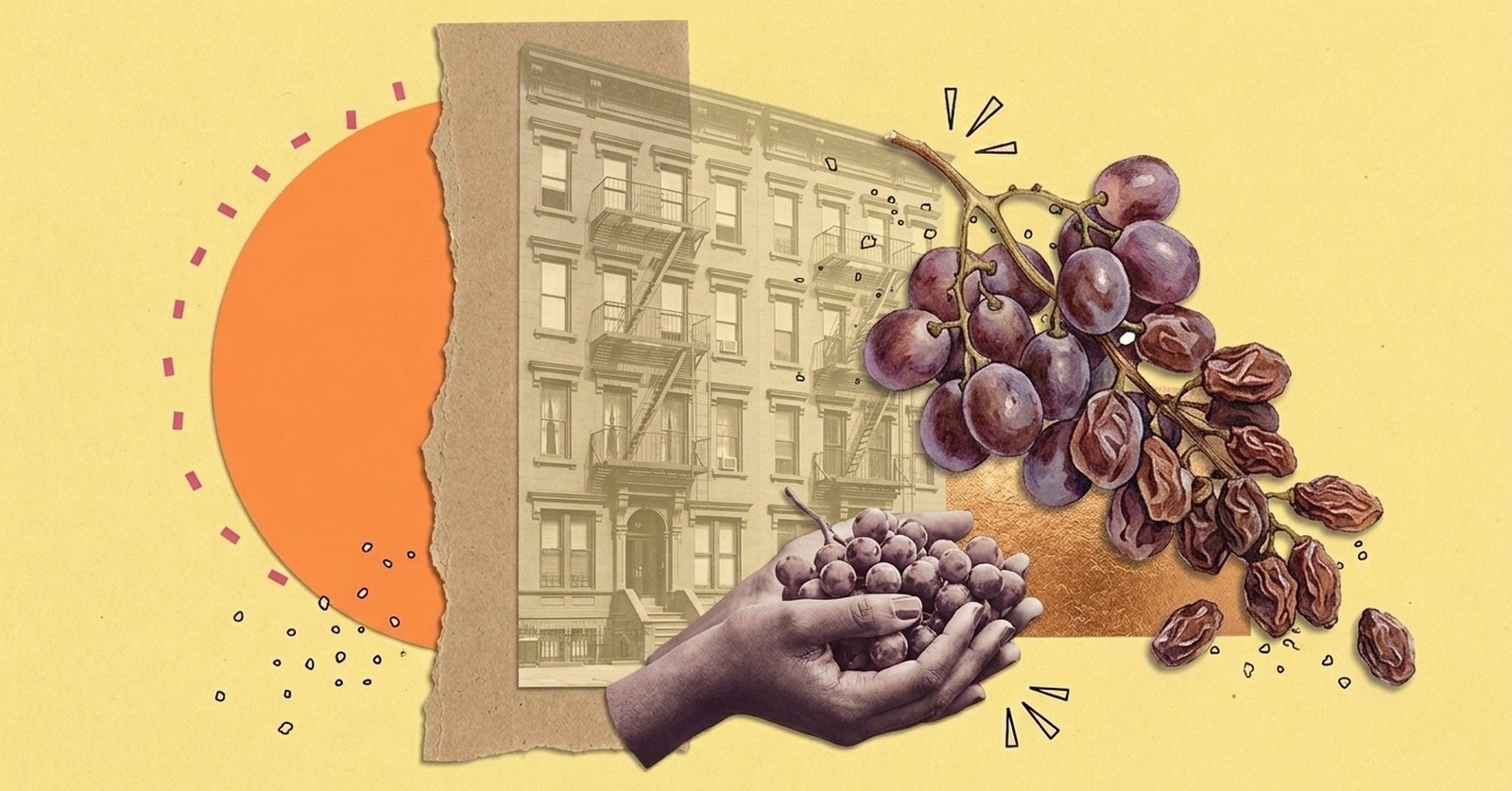
"Harlem" by Langston Hughes asks one question, what happens to a dream that keeps getting put off, and answers it with images you can almost smell: a dream that dries up, festers, rots, weighs you down or finally explodes. Written in 1951 about Black Americans in Harlem whose hopes for a fair life kept being deferred, it's eleven lines that make you feel the cost of waiting instead of just telling you about it.
Do you remember being a child who dreamed without limits? We wanted to be astronauts and pilots. We were going to visit other planets. Nobody had told us yet that some doors would be closed.
But not every child gets that freedom. Children born into poverty, or into societies built on caste or racism, often learn early that dreaming is risky. Many give everything they have and still don't see their dreams come true. Some never get the chance to try. Some shrink their dreams to fit the space they're allowed.
So what happens to all those dreams? That's the question Hughes asks. And if you've ever had to put something you wanted aside for years, you'll recognise the feeling he's describing, even if your story is very different from the one he was telling.
What Is Harlem, and Why Does It Matter to the Poem?
Harlem is a neighbourhood in upper Manhattan, New York City. According to this history of Harlem, the city annexed it in 1873 after a financial panic crashed property values. A building boom in the early 1900s then left a glut of new apartments, values crashed again in 1904 and 1905, and landlords who couldn't find tenants began renting to Black New Yorkers.
In the years that followed, the Great Migration brought Black families north, away from the Jim Crow South, in search of better jobs, schools and safety. Harlem became the heart of Black America's cultural life. It was also a place where those hopes ran straight into discrimination, overcrowding and high rents.
That's the setting the poem's title points to. When you read "Harlem", picture a whole community that came north with a dream, and was still waiting on it decades later.
What Was the Harlem Renaissance?
The Harlem Renaissance was a flowering of Black art, music, literature, theatre and thought centred in Harlem in the 1920s and 1930s. At the time it was called the New Negro Movement. Writers, painters and musicians created work that changed how Black life was seen, and how Black Americans saw themselves.
Langston Hughes was one of its leading voices. If you want a feel for the era before you read the poem, put on some 1920s jazz or blues while you read. Hughes wrote to that rhythm, and you'll hear it in his lines.
Who Was Langston Hughes?
Langston Hughes was born in Joplin, Missouri, in 1901 and died in New York City in 1967. He was a poet, novelist, playwright and columnist, an early innovator of jazz poetry, and best known as a leader of the Harlem Renaissance.
His first poetry collection, The Weary Blues, came out in 1926, and his first short story collection, The Ways of White Folks, in 1934. Across his work he wrote about joy, sorrow, hope and hardship in Black life, and about racism and injustice, in plain language anyone could read. That plainness is the point. He wanted ordinary people to recognise themselves in his poems.
Read the Opening of "Harlem"
What happens to a dream deferred?
Does it dry up
like a raisin in the sun?
Read Langston Hughes's complete poem on the Poetry Foundation. It's short. Read it twice, once silently and once out loud, before you read on.
What Is "Harlem" About?
"Harlem" was published in 1951 as part of Montage of a Dream Deferred, a book-length sequence of poems Hughes meant to be read as one long piece. "Harlem" sits in its final section, and it's so strong on its own that it is usually read by itself. It's also known as "A Dream Deferred", and Lorraine Hansberry took the title of her 1959 play A Raisin in the Sun from it, as this overview of the poem notes.
To defer something is to delay or postpone it. The poem is about the limits placed on Black Americans who wanted to make their dreams real in a country that kept telling them to wait. Not a dream cancelled outright, which would at least be honest, but one put off for a generation, then another.
Hughes doesn't argue the case. He goes into the uncomfortable places most of us hide, and asks what a deferred dream feels like from the inside.
How Do You Read "Harlem" Line by Line?
The poem moves in four steps: a question, a run of images, a softer guess, and a final question that lands like a blow. Here's how to read each one.
The Question
The poem opens by asking what happens to a dream deferred. It sounds simple. Sit with it, though, and the weight behind it comes through. The dream here is, in many ways, the dream of being free from racism and injustice, of living somewhere you're safe and not judged by the colour of your skin.
Try this as you read: notice that Hughes never says whose dream it is. That leaves room for a whole people, and for you.
The Images
Next comes a string of similes, each one more physical than the last. First the dream dries up like a raisin left in the sun. Many readers take the sun as the society that slowly shrivels people's hopes, the way heat shrivels fruit.
Then it festers like a sore, a wound that never heals and keeps getting worse until the pain becomes part of daily life. Then it goes rotten, like meat left out too long, something decaying so openly you can't ignore it. Imagine what a dream left to rot for decades does to a mind.
The last image is the strangest: a dream that hardens into crystallised sugar, like old candy. It looks almost pleasant. We read it as a dream papered over, made to look fine on the surface while it does its damage underneath. That's the one to notice, because it's the one we're most likely to live with without realising.
The Heavy Load
Up to here, Hughes has only asked questions. Now he offers something close to an answer: maybe the dream just becomes a weight, a load you carry on your back. Not dramatic at all. Just carried, every day, for a lifetime.
That understated line is the saddest in the poem. The deferred dream doesn't disappear. It settles into the body and the mind, always there, waiting to surface.
The Explosion
Then the last line asks whether the dream will explode. After decades of discrimination and missed chances, decided not by merit but by skin colour, Hughes suggests the weight becomes unbearable.
And when it bursts, the trigger can be something small. Critics have read that abrupt final question as a warning of the unrest that deferred justice produces. Read it again, and notice how short it is after all those images. That's the shock Hughes wants you to feel.
What Does "Harlem" Ask of You?
Let's be clear about one thing first. "Harlem" is about a collective injustice, not about personal procrastination. Don't shrink it into a poem about the gym membership you never used. Its first job is to make you feel what generations of Black Americans were made to carry, and to stop pretending it wasn't real.
The poem's second job is subtler. It asks you to look honestly at the dreams in your own life, and in the lives around you, that are being deferred. So here's a short practice. Take a notebook and write down one dream you've put aside. Then ask which of Hughes's images fits it: is it drying up, festering, hardening into something sweet-looking, or weighing you down? Write one small step you could take this month, or one way you could help clear the path for someone else's dream.
If you'd like to go further, read our piece on the myths about pursuing big dreams, or the Hey Black Child poem by Useni Perkins, which answers Hughes's question with a call to dream anyway. And if the weight of a deferred dream has settled in and won't lift, it's worth talking it through with a doctor or therapist.
Why This Poem Still Matters
"Harlem" shares the burden and grief of Black Americans with each other and with everyone else who will listen. Its similes pull you in so you don't just understand a deferred dream, you feel it on your skin.
We believe a dream deserves better than to be put off forever, yours and everyone's. So read the poem, sit with it, and then take one small step, for you or for someone whose dream has waited far too long. You're not carrying this alone.
Which line of "Harlem" stays with you? Tell us in the comments.
Lifeism shares ideas and practices for reflection. It is not medical, psychological or financial advice. Read our Disclaimer.