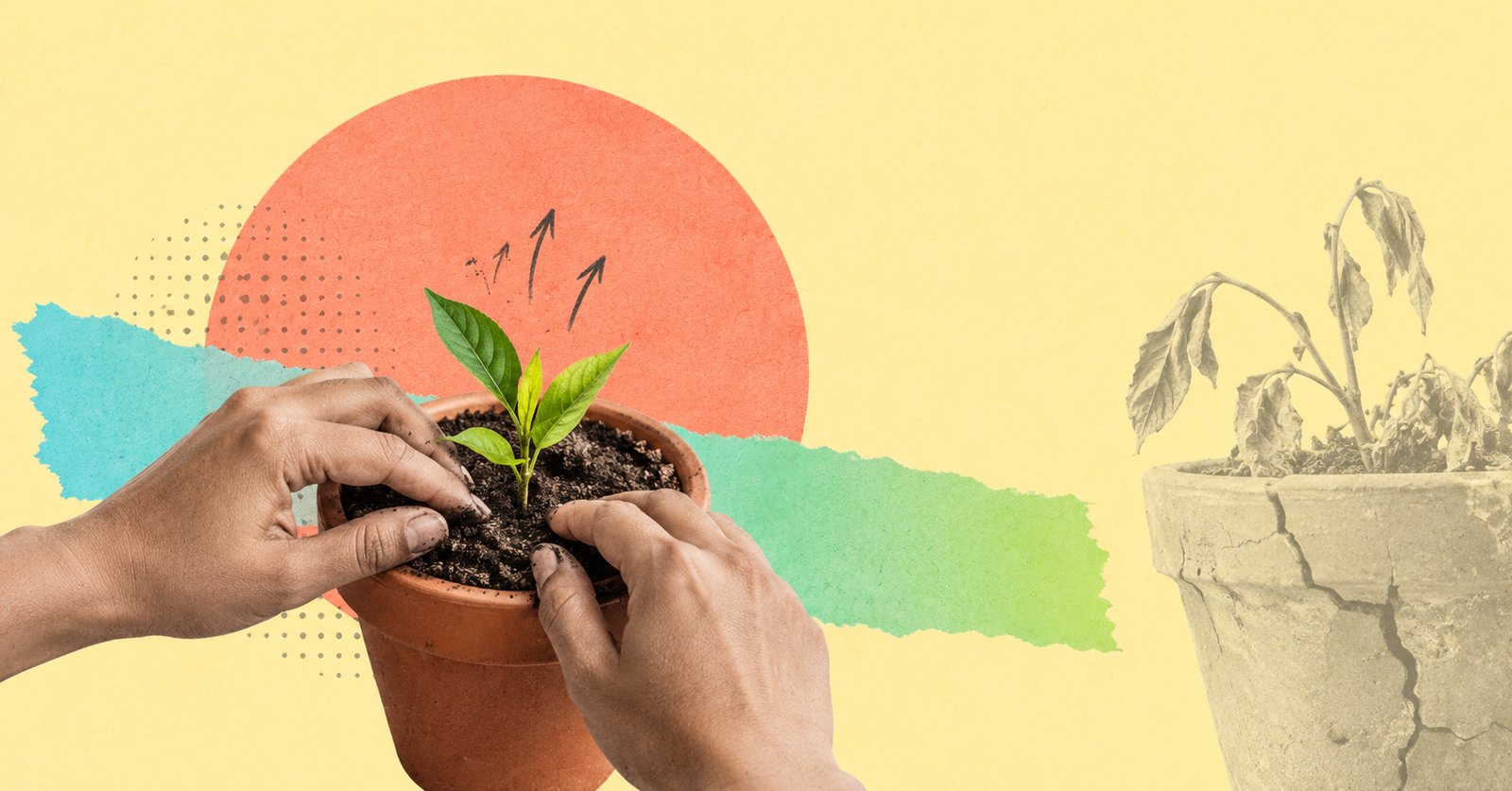
When things just aren't working out, stop fighting the problem for a little while and start building something new beside it. It sounds too simple, we know, but it's often the thing that finally gets you unstuck.
It's just not my day. We've all said it. And then sometimes the day turns into a week, the week into a month, and before we know it, it's been a year of things not going the way we'd hoped.
When we're stuck in a rut, it can feel like the whole world is against us. Work has a problem. Money has a problem. Love, health, home, every corner of life seems to have something wrong with it. This, dear reader, happens to all of us. What you're feeling is real, and the cycle of negativity it pulls you into is genuinely hard to climb out of.
So we're not going to tell you to cheer up. We're going to offer you one shift in approach, and a few small ways to put it into practice this week.
Notice how hard you've been fighting
Here's the strange part. The trouble often starts when we try our hardest to fix things. We pour our thoughts, feelings and energy into the problems that are plaguing us. We dedicate ourselves to beating them. And that's not a bad instinct. You're tackling the issue instead of giving up, and that deserves credit.
But fighting a problem keeps your eyes on the problem. Every morning starts with the thing that's wrong. And underneath, while we fight, we're also trying to cling to how things used to be. Most of us feel safer with the familiar, even when the familiar isn't working, and that can make us resist the very change we say we want.
Try this: take a sheet of paper and finish the sentence "I am fighting..." as many times as you can. My weight. My debt. My boss. My loneliness. Don't solve anything yet. Just see the list. Most of us are fighting on more fronts than we realised, and that alone explains a lot of the exhaustion.
Step back before you push harder
Before you change your approach, give yourself some space from the problems. Not forever. A day or two, or even one evening, where you deliberately don't try to solve anything.
Go for a walk without a podcast. Cook something slow. Sleep early. If a worry pops up, tell it, "Not tonight. I'll see you on Thursday." You're allowed to put things down for a moment. Problems don't get worse because you stopped staring at them for an evening.
When you come back to your list, you'll often see it from a slightly different angle. That small distance is what makes the next question possible.
Ask yourself: what can I build instead?
Look at your list again and ask, for each item: "What am I fighting? Can I build something new instead?"
Say you're trying to lose weight. Don't fight the pounds. Build new habits: eat a little better, sleep on time, move your body. Put all your attention on the things you're building, not on the thing you're fighting.
There's some research behind this. In a year-long study of New Year's resolutions, people who framed their goal as something to move toward, like "I'll eat more vegetables", were more likely to stick with it than people who framed it as something to avoid, like "I'll stop eating sweets". It's one study, not a law of nature, but it matches what a lot of us have felt: running toward something is easier than running away.
So rewrite your list. "Fighting my debt" becomes "Building a savings habit of a small amount every Friday." "Fighting loneliness" becomes "Building one new friendship this season." Same problem, completely different energy.
Start smaller than feels reasonable
When everything has been going wrong, big plans feel exhausting. So make the first brick tiny. Tiny enough that you could do it on your worst day.
Want to move more? Put your trainers by the door and walk to the end of the road. Want to sleep better? Set one alarm that tells you to start winding down, and aim for the seven or more hours the CDC suggests for most adults. Want to feel more in control of your life? Make one promise to yourself today and keep it.
A small habit kept is worth more than a grand plan abandoned. If you'd like a place to begin, here's one habit that can change your health.
Keep a little record of what's working
When we're in a rut, our minds become very good lawyers for the case that nothing is going right. So give the other side some evidence.
Every night for the next week, write down three things: one small thing you built today, one thing that went better than expected, and one thing you're grateful for. It takes two minutes. By Sunday you'll have proof, in your own handwriting, that something is moving. Our simple gratitude practices can help you make this stick.
The hard things are still there. This simply makes sure you see the good ones too.
Let someone build alongside you
You don't have to do this alone, and you probably shouldn't. In that same resolutions study, the group that received some extra support along the way did better than the others.
So tell one person what you're building. Not what you're fighting, what you're building. Ask them to check in with you in two weeks. Or find someone who's working on something similar and swap a quick message every Friday. A little company turns a lonely effort into a shared one.
Let the old chapter close
Real change tends to happen when we focus on what we could become rather than replaying what went wrong. We believe that every one of us carries more potential than our worst season suggests. Change can be uncomfortable, and that's okay. Here's why it's worth embracing change, even when it feels hard, and if you want a fuller toolkit, try these 12 things you can do to take control of your life.
If the low feeling doesn't lift after a few weeks, or it starts to affect your sleep, appetite or the way you see yourself, please talk to a doctor or a therapist. Asking for help is one more thing you're building.
Some days still won't be your day. That's fine. Build anyway. You will get out of this, and we're right here with you.
What's one thing you're going to build this week? Tell us in the comments.
Lifeism shares ideas and practices for reflection. It is not medical, psychological or financial advice. Read our Disclaimer.