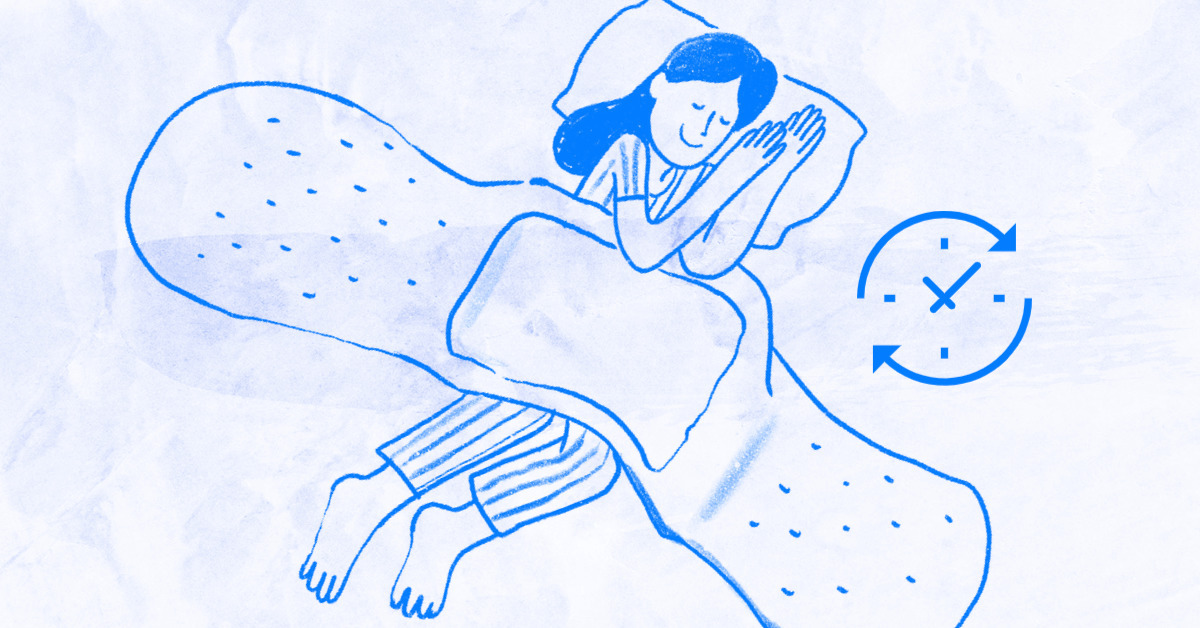
To fix your sleep routine, go to bed and get up at the same time every day, and build a calm wind-down around that time: dimmer lights, screens away, no late caffeine or big meals. Change things slowly, in small steps, and give your body a few weeks to catch up before you decide it isn't working.
"Without enough sleep, we all become tall two-year-olds." JoJo Jensen, Dirt Farmer Wisdom
If you've ever snapped at someone you love over nothing after a bad night, you know exactly what Jensen means. Sleep is where we get our patience back.
And so many of us are running short. In CDC survey data on adult sleep, at least 30% of adults in every US state reported getting less than the seven hours a night that adults need. We know sleep matters. We often even know the fix. We just can't seem to make it stick.
Some of these tips will sound simple, and you may already know a few. That's fine. Sometimes a reminder is all it takes to tip you over, ever so gently, into doing it.
Start with a routine, not a rescue
A routine is a series of small actions you do each night, in roughly the same order. Over time you can "stack" the habits that work for you until the whole sequence tells your brain it's time for bed. As we wrote in waking up to better sleep, good sleep is what restores us, body and mind.
Stacking takes time. Be patient with yourself, and be kind to yourself on the nights it doesn't go to plan. Small habits add up, and the whole routine ends up greater than its parts.
Here are 14 tips to build it with. Don't try them all this week. Pick two.
Fix a time to go to bed
This is the simplest advice we can give you. But simple isn't the same as easy. The CDC's list of better sleep habits starts right here: go to bed and get up at the same time every day.
Start your wind-down about 45 minutes before that time. Floss, take off your makeup, change into your nightclothes, dim the lights and turn on the night setting on your devices. Try to be under the covers before your bedtime, not just reaching for the light switch at it.
Then move slowly. If you usually sleep at midnight and want to sleep by 10 PM, don't jump two hours on day one. The Sleep Foundation suggests shifting in 15 or 30 minute steps over a series of days. So try 11:30 PM first, feel good about getting it done, then keep going.
Get active, earlier in the day
Most of us sit in one place for work. We end the day drained mentally but with plenty of physical energy left over. Moving your body gives it a reason to want rest later.
If you can, work out in the morning or afternoon. According to the Sleep Foundation's guide to exercise timing, moderate exercise generally doesn't hurt sleep as long as it ends about 90 minutes before bed, but a vigorous workout within an hour of bedtime may make it harder for some people to drift off.
These guidelines work for most people, but you know your body best. Notice how you sleep after an evening session, and adjust.
Eat earlier and lighter at night
What you eat in the evening shows up in your night. The CDC recommends avoiding large meals and alcohol before bedtime, so aim to finish your main meal well before you start winding down.
Alcohol deserves a special mention, because it feels like it helps. The Sleep Foundation explains that while a drink may make you sleepy at first, it tends to lead to lighter, more broken sleep, especially in the second half of the night.
Sweets are worth watching too: sugary drinks and sweets have been linked with worse sleep. If you want something before bed, try a small, plain snack instead of dessert.
Challenge yourself with a fixed wake-up time
If you're ready to take it up a notch, try a 30 or 60 day challenge. Commit to getting up at the same time every single day, weekends included.
Notice that the anchor is when you get up. The Sleep Foundation suggests fixing your wake-up time first, so your schedule has one solid anchor, then using good evening habits to ease into your new bedtime.
One rule for this challenge: don't use it to squeeze your sleep. If you get up earlier, go to bed earlier, so you still get the seven or more hours the CDC recommends for adults. Mark each day on a calendar. Watching the chain grow is half the fun.
Try a sleep meditation or calming sound
Sound can be a lovely way to close the day. Some people swear by guided sleep meditations, others by soft music, rain sounds or binaural beats, where each ear hears a slightly different tone.
Be gentle with your expectations, though. The Sleep Foundation notes that evidence for binaural beats as a sleep aid is limited and results vary. A guided practice such as yoga nidra, which leads you through deep relaxation while you stay awake and aware, may help calm your mind before bed.
We all respond differently, so you won't find the perfect soundtrack on day one. Experiment, note what works and build a small library you love. Start it while you're winding down, not once you're already under the covers. If you're new to this, our easy everyday meditations are a gentle place to begin.
Regulate your caffeine
We're not going to ask you to give up coffee or tea. But caffeine stays in your system longer than most of us think. The Sleep Foundation's caffeine guide puts its half-life anywhere between 2 and 12 hours depending on the person, and notes it can reduce the amount of deep sleep you get, even if you fall asleep fine.
So even if you can sleep after a late coffee, it may still be costing you. Here's what you can do:
- Set a cut-off time. The CDC advises avoiding caffeine in the afternoon or evening. Early afternoon is a good starting point, earlier if you know you're sensitive.
- Swap one cup. Often we want something warm, not something caffeinated. Try replacing your afternoon coffee with a herbal tea such as chamomile.
- Track it. Simply noting each cup for a week shows you how much you're really drinking, and when.
Use a sleep tracker, but don't obsess over it
Smartwatches and sleep apps can show you patterns: how late you really fell asleep, how often you woke up, how a late coffee or a glass of wine changed your night. Used that way, they can help you tweak your routine.
Just remember they are estimates. The American Academy of Sleep Medicine's position on consumer sleep technology is that these devices aren't validated to diagnose or treat sleep disorders, though they can be a useful starting point for a conversation with your doctor.
If you'd rather go low-tech, keep a simple sleep diary for two weeks. Write down when you went to bed, when you woke up, any naps, exercise, caffeine and alcohol. It's the same information a doctor may ask you for anyway.
Keep your bedroom cool
Your body temperature naturally drops as you get ready to sleep and through the night. A room that's too warm works against that, and one that's too cold keeps you awake shivering.
The Sleep Foundation puts the ideal sleep temperature at around 65 to 68°F (roughly 18 to 20°C), give or take a few degrees for each person. Where you live, the season and your bedding all play a part, so treat it as a starting point and notice how you feel.
Tonight, try turning the thermostat down a notch, or opening a window an hour before bed, and see if it makes a difference.
Is sleeping naked better than sleeping in clothes?
It can be, if you tend to run hot. The Sleep Foundation notes that sleeping naked may help regulate body temperature and keep you from overheating. If that's not for you, loose, light, breathable nightclothes do a similar job.
Change your lighting
Our bodies are built to rise with the sun and rest with the dark. It isn't only the amount of light that matters, but the slow fading of it in the evening. Bright lights and glowing screens late at night blur that signal.
According to the Sleep Foundation's guide to light and sleep, light at night can suppress melatonin, the hormone that helps regulate sleep. Night mode on your phone cuts some blue light, but the stimulation of screen time may still keep you wired.
So recreate a sunset at home:
- Switch off overhead lights in the evening and use a small, warm, low lamp instead. Many smart bulbs can dim themselves at the same time every night.
- Put devices away at least 30 minutes before bed, as the CDC suggests.
- Get some daylight in the morning. Morning sunlight may help your sleep that night, too.
Make your bed work for you
If you're getting the seven or more hours a night that adults need, you're spending a big part of your life in that bed. It's worth getting right.
You can't tell much by lying on a mattress for a few seconds in a store, and companies know it. The Sleep Foundation's guide to mattress trials says home trials typically run 90 to 120 nights, so you can test one properly. If you share a bed, look for one that absorbs your partner's movements.
Can't replace your mattress right now? Try a topper first, or change the base. And remember your needs shift through life, with age, pregnancy or an injury. The bed that suited you five years ago may not suit you today.
Add calming scents and a warm bath
Smell is a powerful cue. It tells us when food is ready and whether it's ripe or rotten, and it can tell us it's time to slow down too.
Lavender seems to be the most studied essential oil, and the Sleep Foundation's essential oils guide says certain oils may help some people sleep better. Try a little on your pillow or in a diffuser, and follow the label for how to dilute it on skin.
A warm bath or shower helps too. The Sleep Foundation explains that warm water about one to two hours before bed may make it easier to fall asleep, by helping your body with its natural evening drop in temperature.
Try gentle yoga before bed
Yoga is the practice of becoming aware of your body, mind and breath. A power class is a workout, but the gentler side of yoga is made for evenings. The Sleep Foundation's yoga and sleep guide says regular practice may improve sleep quality and reduce stress, and that gentle styles suit bedtime better than vigorous ones.
Here are a few calming poses to try. Move slowly, breathe, and stop if anything hurts.
- Butterfly pose. Sit on the floor and bring the soles of your feet together. Interlock your hands around your feet and, as you exhale, gently draw them a little closer to you. Close your eyes, keep breathing and let your knees soften.
- Hare pose. Kneel and sit back on your heels. Inhale, then as you exhale, fold forward and stretch your arms out in front of you. Relax your back and shoulders.
- Seated forward bend. Sit with your legs stretched out in front of you, toes pointing up. Raise your arms, inhale, then fold forward on the exhale, reaching for your shins or toes. Only go as far as feels comfortable, and keep breathing.
- Wind-relieving pose. Lie on your back, bend your knees and hug them in towards your chest. Close your eyes and breathe slowly.
- Crocodile pose. Lie on your tummy with your legs apart and toes pointing outward. Fold your arms in front of you and rest your forehead on your hands. Let your breathing slow down.
- Corpse pose (shavasana). Lie flat on your back, arms away from your body, palms up, legs relaxed. Close your eyes and move your attention through your body, relaxing each part without moving it. Stay for about 10 minutes.
If you'd like someone to guide you, Yoga With Adriene's 20-minute bedtime yoga is a gentle place to start, and our guide to supine yoga poses has more you can do lying down.
Talk to your doctor before taking sleep supplements
It's tempting to reach for a supplement. Some can help in the right situation, but they're not a fix for every sleep problem.
Melatonin, for example, can help with jet lag, shift work and some sleep disorders, according to the Sleep Foundation's melatonin guide, which also notes it can cause side effects and interact with certain medications. Research on magnesium for sleep suggests it may help some people, particularly those low in it, but more research is needed.
So before you try anything, ask your doctor or pharmacist, especially if you're pregnant, breastfeeding, take other medicines or have a health condition. Take the list of what you're considering to your next appointment.
Get help if it doesn't get better
Sleep touches everything: our mood, our work, the way we treat the people we love. When good sleep feels impossible, it can affect our whole life.
There's real help available. The NHS advises seeing a GP if changing your sleep habits hasn't helped, if you've had trouble sleeping for months, or if it's making daily life hard to cope with. A doctor may suggest cognitive behavioural therapy for insomnia, which the Sleep Foundation describes as a first-line treatment for chronic insomnia that doesn't rely on medication.
So if poor sleep keeps up for more than a few weeks despite these changes, book that appointment. You don't have to wait until you're at the end of your rope.
And one last thing. Don't let sleeplessness become a cause of, well, more sleeplessness. Lying there stressing about not sleeping only makes it harder. If you've been awake for about 20 minutes, the Sleep Foundation suggests getting up and doing something relaxing in low light, then going back to bed once you feel tired.
We believe rest is something you're allowed, whatever your to-do list says. Be patient with your body while it relearns the rhythm. One small habit at a time, you will find your way back to good sleep.
Which tip are you trying first? Tell us in the comments.
Lifeism shares ideas and practices for reflection. It is not medical, psychological or financial advice. Read our Disclaimer.